 Easy read and translate

Communicating with your baby
- 0-1 Years
- Child development and growing up
- Speech, language and communication

Babies can communicate from the moment they are born. Talk to your baby from the very first day, as they start learning from you straight away.
Explore the topics on this page:
Talking to your baby
It’s important to talk to your baby from their first day. Spend time with your baby and let them watch your face. You can vary your voice by changing your pitch. This will help keep your baby interested.
Babies have lots of ways to communicate with you, such as:
- crying
- making sounds
- turning their heads
- changing their facial expressions
- smiling
- pointing
Make sure you respond to all their ways of communicating. Then they will learn that their efforts are meaningful.
Always accept your baby’s attempts at words, even if they are not clear. Give them lots of encouragement. For example, if your baby points at a cat and says “ta” you can say “Yes, it’s a cat!” in an excited manner.
Talk to your baby in your home language; it doesn’t have to be English. Babies raised in multilingual households can learn multiple languages from birth.
For more tips on how to talk to your baby, visit the BBC’s Tiny Happy People page.
Copying
Copying is an important skill to learn as it involves working together. Games and activities that encourage copying are very helpful for young children. Do not force your toddler to copy you.
You can help by:
- pulling silly faces like sticking out your tongue and puffing out your cheeks
- copying your toddler’s babbling, you can take turns to babble like a conversation
- playing games like peek-a-boo
- encouraging them to wave bye-bye and shake their head for no
- making different noises like animal sounds or making sounds with objects
Encouraging your baby to notice things
It’s important to encourage your baby to pay attention to their surroundings. There are a variety of ways you can do this.
- Encouraging your baby to notice when someone appears or disappears by saying, “Where’s daddy gone?”
- Pointing to things and talking about them when you go to places, like “Wow, that’s a big tree!”
- Listening to the sounds in your environment, like dogs barking, traffic sounds or leaves rustling. Point out what you can hear and name it to draw your babies’ attention to it. This will help build their listening and attention skills.
- Saying your baby’s name to alert them to new people or things near them. An interesting face or object will encourage them to continue to look and learn.
- Talking to your baby with simple language and repeating yourself a lot. You can do this whilst playing or sharing activities with them, like blowing bubbles.

Sounds, songs and rhymes
Babies love music and sounds, and they can help with your baby’s talking. Here are some ideas to encourage your baby to join in with you.
- Encourage your baby to listen to lots of different sounds. You can do this by playing with different noise-making things like rattles, drums or musical toys. A saucepan and a wooden spoon make a great noise if you don’t have any musical toys. If you show that you are interested and excited in the sounds, your baby will love it too.
- Play peek-a-boo games. You can use a thin scarf and drape it over your babies’ face. When you pull it down, say ‘peek-a-boo’!
- Play with puppets, you can use the puppets to sing nursery rhymes and songs.
- Make up songs that you can sing throughout the daily routine, for example a tidy up song, or a bath time song.
Sharing books
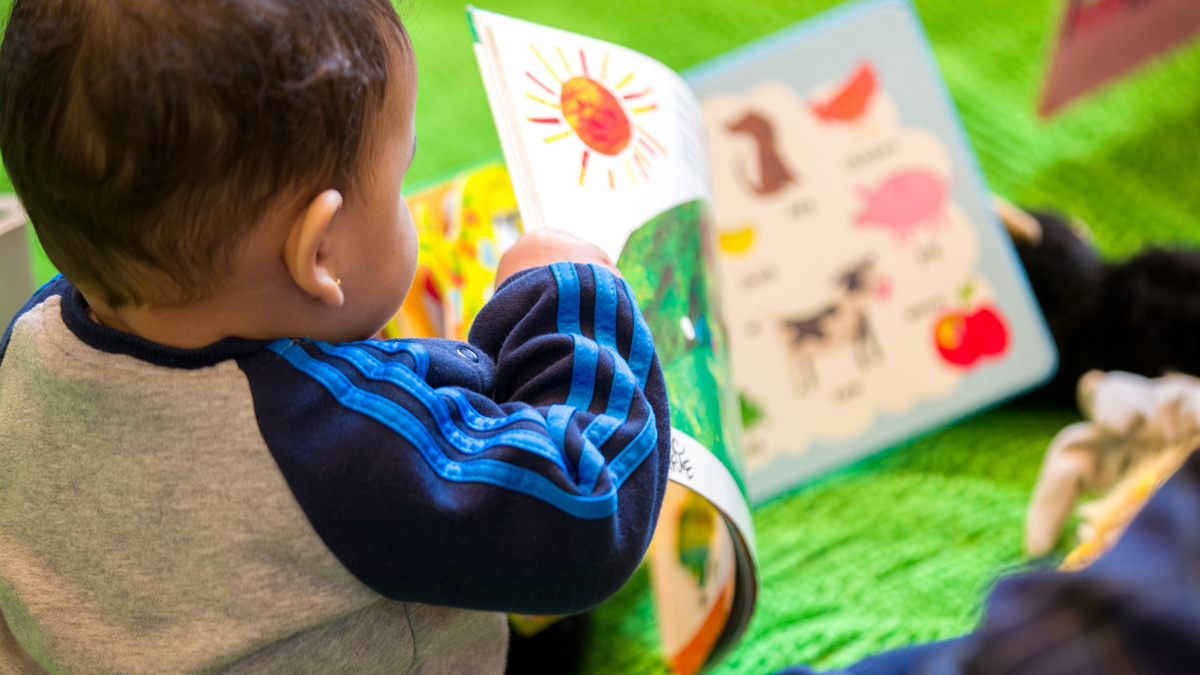
It’s never too early to start sharing books with your baby. Sharing books and stories helps to build children’s language and helps your baby develop a love of reading. It also gives your baby the chance to hear and recognise new sounds and words, which are the first building blocks of language.
You don’t have to read every word or page in a book. Look at the pictures together and talk about the things your baby is interested in.
Visit your library to discover new books. Your local library might offer a Rhyme Time session for you and your baby to enjoy together.
Last reviewed: 1 November, 2024
